- Home
- Book 1 - No Not One
- Book 2 - No Not One More
- APPENDIX A - THE 7 FEASTS
- APPENDIX B: Ezra Who
- APPENDIX C: Bethlehem?
- APPENDIX D: Order-Meaning
- Disclaimer & Back Story
- Reflections #1-2-3
- Reflections #4-5-6
- Reflections #7-8-9-10
- Reflections #11-12-13-14
- Reflection & Prayer
- Footnotes/Scripture Index
- Benediction & Back Cover
Chapters 11 & 12
Chapter 11
STARTS THE REIGN OF A KING
TRIBE OF JUDAH LEADS
KINGSHIP, JUDAH, AND THE MONTH OF NISAN
Nisan: The New Year for Kings
In Jewish tradition, Nisan 1 holds a unique and authoritative status. While other dates in the Hebrew calendar mark agricultural or civil transitions, Nisan 1 is specifically recognized as the New Year for kings—the date from which the regnal years of Israel’s monarchs were counted.¹
This tradition establishes Nisan as the month associated with authority, inauguration, and rightful rule. It is the time when kingship is recognized, measured, and affirmed.
Within this framework, the arrival of Jesus as King of Kings aligns naturally with the month historically linked to coronation and royal beginnings. His coming does not merely introduce a spiritual message—it inaugurates a new and eternal kingship.
Nisan and the Royal Tribe of Judah
The connection between Nisan and kingship is inseparable from the tribe of Judah.
Judah is the royal tribe of Israel—the lineage of King David and the prophesied source of the Messiah. Scripture declares that rulership would not depart from Judah, establishing the tribe as the seat of kingship and authority.² Jewish tradition consistently associates Judah with leadership, sovereignty, and praise.
Nisan, as the first month of the biblical year, mirrors Judah’s role among the tribes.
Judah Goes First
During Israel’s wilderness journey, Judah was appointed to lead the march whenever the camp set out.
- Judah’s banner went before the people
- Judah moved first in battle and travel
This leadership role is recorded in Numbers 2 and Numbers 10, where God explicitly assigns Judah the vanguard position.³
This positioning symbolized initiative, courage, and divinely appointed leadership.
Judah Represents Kingship
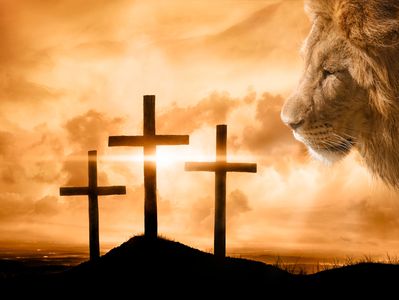
Judah’s emblem is the lion, a symbol of strength, sovereignty, and settled authority.
Jacob’s blessing over Judah declares:
“Judah is a lion’s whelp… The scepter shall not depart from Judah.”
— Genesis 49:9–10⁴
This imagery later becomes explicitly messianic in the title **“the Lion of the Tribe of Judah.”**⁵
Because Nisan is the “head of months,” and Judah is the leading tribe, the alignment between time and tribe reinforces the theme of divinely ordered leadership.
Judah, Praise, and Redemption
The name Judah (Yehudah) means praise or thanksgiving.
In Jewish thought, praise is not merely expressive—it is transformative. Praise is associated with:
- Breakthrough
- Transition
- Crossing into new territory
This meaning resonates deeply with Nisan, the month of Passover, when Israel crossed over from slavery into freedom.
Key connections include:
- Nisan commemorates the Exodus, the foundational act of national redemption
- Praise is central to Passover, as Israel recounts God’s mighty acts
- Jewish tradition often links decisive leadership with faith-filled action—such as stepping into the Red Sea before it parted⁶
Thus, Judah’s identity as the tribe of praise aligns with Nisan as the month of miracles, deliverance, and new beginnings.
Jesus and the Inauguration of a New Kingship
Within this established biblical and Jewish framework, the birth of Jesus takes on unmistakable royal significance.
The New Testament presents Jesus not merely as a teacher or prophet, but as:
- The Son of David
- The rightful heir to Judah’s throne
- The King whose kingdom has no end⁷
If Nisan 1 marks the beginning of kingship in Israel’s reckoning, then the Messiah’s entrance into the world during this month reflects the inauguration of a new and eternal reign—one rooted not in political power, but in redemption.
Just as the Exodus marked the birth of a nation, the coming of Jesus marks the beginning of God’s restored kingdom among humanity.
A Month of Firsts, Authority, and Redemption
Nisan stands apart as a month defined by beginnings:
- Declared by God as the “beginning of months” (Exodus 12:2)
- Established in Jewish tradition as the New Year for kings
- Marked by redemption through Passover
- Associated with Judah’s leadership and praise
These themes converge naturally in the person of Jesus.
His birth does not merely coincide with a season—it aligns with a divinely appointed framework of kingship, authority, and redemption long established in Scripture and tradition.
Nisan is the month of beginnings.
Judah is the tribe of kings.
Jesus is the King of Kings.
Within the biblical pattern, this alignment is neither forced nor incidental. It reflects the continuity of God’s design—where time, tribe, and kingship converge in the fulfillment of redemption.
Nisan marks the start of royal authority.
Judah leads the way.
The Messiah reigns.
References — Chapter 11 (NKJV unless noted)
- Mishnah, Rosh Hashanah 1:1
- Genesis 49:10
- Numbers 2:3; Numbers 10:14
- Genesis 49:9–10
- Revelation 5:5
- Exodus 14:15–16; rabbinic tradition (Nachshon ben Aminadav)
- Luke 1:32–33; Matthew 1:1
Chapter 12
SHEPHERDS IN THE FIELDS
THE SHEPHERDS AND THE TOWER OF THE FLOCK
Shepherds in the Fields by Night
Luke’s Gospel records a specific and revealing detail about the night of Jesus’ birth:
“Now there were in the same country shepherds living out in the fields, keeping watch over their flock by night.”
— Luke 2:8¹
This description has long been noted in discussions concerning the season of Jesus’ birth. Shepherds “living out in the fields” suggests a time of year when flocks were kept outdoors overnight—conditions more consistent with spring or early autumn than with the colder, wetter winter months typical of Judea.
While the Bible does not explicitly assign a season to Jesus’ birth, the presence of shepherds in the fields supports a timeframe compatible with Nisan, the month associated with lambing, renewal, and preparation for Passover.
Shepherds, Lambs, and Sacrifice
In first-century Judea, shepherding was not a uniform occupation. Certain shepherds were responsible for flocks designated for Temple use, particularly lambs required for sacrifice.
According to Jewish tradition, lambs destined for Temple sacrifice had to be:
- Male
- One year old
- Without blemish
(Exodus 12:5)
Spring was the primary season for lambing, aligning naturally with the requirements of Passover sacrifice. This seasonal reality provides theological resonance with the New Testament’s identification of Jesus as the “Lamb of God.”²
Migdal Eder — The “Tower of the Flock”
Migdal Eder (“Tower of the Flock”) is mentioned in Scripture in the context of Bethlehem:
“And Jacob journeyed and pitched his tent beyond the tower of Eder.”
— Genesis 35:21³
Later Jewish tradition associates this location with the oversight of flocks used for Temple sacrifice. Some rabbinic writings suggest that priests supervised shepherds in this region to ensure lambs met sacrificial standards.⁴
Because Bethlehem lay within the pastoral zone supplying Jerusalem, Migdal Eder became symbolically linked—though not conclusively identified—with the raising of sacrificial lambs.
It is important to note:
- Scripture does not state that Jesus was born at Migdal Eder
- The association arises from tradition and theological inference, not explicit biblical declaration
Swaddling, the Manger, and Symbolic Foreshadowing
Luke describes the newborn Jesus as:
“Wrapped in swaddling cloths, and laid in a manger.”
— Luke 2:7⁵
Some interpreters have drawn symbolic parallels between this description and known practices used to protect newborn lambs destined for sacrifice, which were sometimes wrapped to prevent injury.
Additionally, the Greek term translated as “manger” (phatnē) can refer broadly to a feeding place or stall, not exclusively a wooden trough.⁶ This has led some scholars to propose that the setting may have been more structured than traditionally imagined.
These interpretations are symbolic, not declarative. They do not redefine the Gospel narrative, but they do highlight how Luke’s imagery subtly aligns Jesus’ birth with sacrificial themes that his original audience would have recognized.
Shepherds as the First Witnesses
The identity of the first witnesses to Jesus’ birth is itself significant.
Shepherds were:
- Socially marginalized
- Ritually familiar with lambs and sacrifice
- Constantly engaged with themes of watchfulness and care
That angels would announce the Messiah’s birth to shepherds—rather than priests or kings—reflects a consistent biblical pattern: God reveals His redemptive work first to the humble.
If these shepherds were indeed connected to Temple flocks, the symbolism deepens—but even without that assumption, the theological message remains intact.
Conclusion
Luke’s account does not provide an explicit location or calendar date for Jesus’ birth. What it does provide is a network of imagery—shepherds, lambs, swaddling, and watchfulness—that fits naturally within the theological landscape of Nisan.
This chapter does not claim certainty where Scripture is silent. Instead, it shows how biblical narrative, seasonal reality, and Jewish tradition converge to form a coherent and meaningful framework.
Jesus is introduced to the world not in spectacle, but in humility.
Not among rulers, but among shepherds.
Not amid ceremony, but amid the quiet vigilance of those who tend lambs.
In that setting, the Lamb of God entered the world.
References — Chapter 12 (NKJV unless noted)
- Luke 2:8
- John 1:29; 1 Corinthians 5:7
- Genesis 35:21
- Mishnah, Shekalim; later rabbinic commentary on Temple flocks (interpretive tradition)
- Luke 2:7
- Greek phatnē; BDAG Lexicon; Patheos (interpretive discussion)
