- Home
- Book 1 - No Not One
- Book 2 - No Not One More
- APPENDIX A - THE 7 FEASTS
- APPENDIX B: Ezra Who
- APPENDIX C: Bethlehem?
- APPENDIX D: Order-Meaning
- Disclaimer & Back Story
- Reflections #1-2-3
- Reflections #4-5-6
- Reflections #7-8-9-10
- Reflections #11-12-13-14
- Reflection & Prayer
- Footnotes/Scripture Index
- Benediction & Back Cover
Chapters 7 & 8
Chapter 7
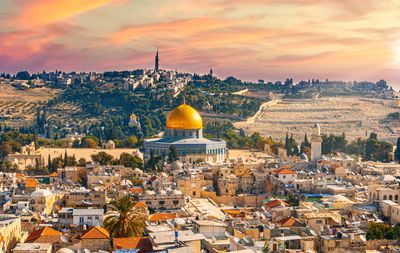
REBUILDING WALLS OF JERUSALEM &
RESTORATION OF ISRAEL – NEHEMIAH
Nehemiah received his commission from King Artaxerxes to rebuild the walls of Jerusalem during the month of Nisan, in the twentieth year of the king’s reign (Nehemiah 2:1).¹ While many traditions identify this moment as occurring on Nisan 1, the biblical text itself specifies only the month of Nisan.
Even so, the timing remains significant.
The Significance of Nehemiah’s Commission
Physical Restoration of Jerusalem
The most immediate importance of Nehemiah’s mission was practical. He was granted:
- Royal authority
- Letters of safe passage
- Orders for timber and supplies
These provisions enabled the reconstruction of Jerusalem’s walls and gates, which had been destroyed decades earlier by the Babylonians. Without walls, the city remained exposed, vulnerable, and dishonored. Rebuilding them was essential for protection, public safety, and the restoration of civic stability.²
Symbol of Sovereignty and Security
In the ancient world, a city without walls was considered weak and defenseless. Rebuilding Jerusalem’s walls symbolized more than construction—it represented:
- Renewal of the community
- Security under God’s protection
- Recognition of limited self-governance under Persian authority
The walls restored Jerusalem’s status as a functioning, defended city.
National Morale and Dignity
The king’s approval marked a turning point for the Jewish people. After years of discouragement and opposition, Nehemiah’s commission gave them:
- Hope
- Direction
- A tangible goal
The rebuilding effort unified the people around a shared purpose and renewed their sense of identity.³
Coinciding with Ezra’s Reforms
Nehemiah’s work complemented the earlier ministry of Ezra.
- Ezra restored the people spiritually by re-establishing the Law of Moses
- Nehemiah restored the city physically by rebuilding its walls
Together, they rebuilt both the people and the place. Nehemiah ensured the community had a secure environment in which to live according to the Law Ezra taught.⁴
Fulfillment of Prophecy
Like Ezra’s return, Nehemiah’s mission was viewed as the fulfillment of God’s promises spoken through the prophets.
Prophets such as Jeremiah and Isaiah foretold the restoration of Jerusalem and the return of God’s people after exile. Nehemiah’s success confirmed that God was faithful to His word and actively guiding Israel’s restoration.⁵
Why the Month of Nisan Matters
The timing of Nehemiah’s commission in Nisan carries theological weight.
Nisan is:
- The month of the Exodus
- The month of the Tabernacle’s dedicatio
- The beginning of God’s redemptive calendar
Once again, restoration begins in the month associated with deliverance, renewal, and God’s intervention.
By commissioning the rebuilding of Jerusalem during Nisan, God reaffirmed a consistent pattern: redemption leads to restoration, and restoration requires both spiritual obedience and physical security.
Conclusion
Nehemiah’s mission restored what exile had stripped away.
- The city was rebuilt
- The people were protected
- The nation’s dignity was restored
Commissioned in the month of Nisan, Nehemiah’s work stands as another example of God initiating renewal at the appointed time.
References — Chapter 7 (NKJV unless noted)
- Nehemiah 2:1
- Nehemiah 2:7–9; Nehemiah 4
- Nehemiah 2:17–18
- Nehemiah 8; Ezra 7–10
- Jeremiah 29:10; Isaiah 44:26–28
Chapter 8
DAY OF CREATION
THE SECOND ‘FIRSTBORN’ (ADAM)
DAY OF CREATION
THE SECOND “FIRSTBORN” (ADAM)
Jewish tradition has long associated the creation of the world with the month of Nisan. Rabbi Joshua, as cited in the Talmud (Rosh Hashanah 10b), taught that the universe itself was created in Nisan, with the very first day marking the moment God brought creation into existence.¹
This tradition matters—not because it replaces Scripture, but because it reflects how ancient Jewish readers understood God’s pattern of beginnings. In the biblical worldview, God does not act randomly. He works with intention, rhythm, and repetition.
Seasons matter.
Appointed times matter.
Beginnings matter.
That understanding opens the door to a profound prophetic parallel: creation and new creation.
Creation and New Creation
If the original creation began in Nisan, it is not unreasonable to consider that God might choose the same appointed time to begin His greatest work of renewal.
In Christian theology, Jesus is repeatedly described as the beginning of a “new creation”:
“Therefore, if anyone is in Christ, he is a new creation; old things have passed away; behold, all things have become new.”
— 2 Corinthians 5:17²
His arrival marks not merely a historical moment, but a cosmic reset—the restoration of what was lost.
The Bible’s Design Pattern: Genesis to Revelation
Many biblical scholars and theologians have observed that Scripture consistently links the beginning of the Bible (Genesis) with its conclusion (Revelation). These connections are not incidental. They reveal deliberate authorship—a God who knows the end from the beginning and writes history with intention.³
Throughout Scripture, major themes introduced in Genesis are mirrored and resolved in Revelation:
- Creation gives way to new creation
- The Fall gives way to redemption
- Separation gives way to restoration
This is not fragmentation.
It is one continuous story—from Alpha to Omega.
Creation, Fall, and Restoration: A Pattern Revealed
The Bible opens with a world created, ordered, and declared good. It closes with a world renewed, restored, and free from curse. Scripture itself provides parallel images to make this connection unmistakable:
(SEE CHART)
These mirrored images reveal something essential:
The Bible does not tell two different stories.
It tells one story—restored.
Adam and Christ: The First and the Last
The New Testament explicitly identifies Adam as a type—a pattern pointing forward to Christ.
Paul writes:
“For since by man came death, by Man also came the resurrection of the dead. For as in Adam all die, even so in Christ all shall be made alive.”
— 1 Corinthians 15:21–22⁴
Adam is called the first man.
Jesus is called the last Adam (1 Corinthians 15:45).⁵
The comparison is deliberate:
- Adam’s disobedience introduced death
- Christ’s obedience defeated it
Even the settings mirror one another:
- Adam fell in a garden — Eden
- Christ surrendered in a garden — Gethsemane
- Eve was formed from Adam’s side while he slept
- The Church was born after Christ’s side was pierced
- Adam lost dominion
- Christ restores dominion and reigns eternally
These are not symbolic coincidences.
They are narrative echoes—how God redeems history rather than discarding it.
Creation and Re-Creation: Why Nisan Matters
Within this framework, the Hebrew month of Nisan takes on profound theological meaning.
- Jewish tradition associates Nisan with creation
- Scripture associates Nisan with Exodus and redemption
- Christianity associates Nisan with Passover and resurrection
If God chose Nisan to begin the physical creation, it aligns with His character to choose Nisan to begin the spiritual re-creation.
The New Testament describes Jesus as:
“The firstborn over all creation.”
— Colossians 1:15⁶
This does not mean Christ was created. It means He holds supremacy and inaugurates a new order—just as Nisan inaugurates the biblical year.
Through Christ, humanity is offered not merely a return to Eden, but something greater:
“Do you not know that you are the temple of God and that the Spirit of God dwells in you?”
— 1 Corinthians 3:16⁷
Conclusion
What appeared to be loss became transformation.
What seemed like defeat became design.
Seen through Scripture’s own patterns, the connection between creation and re-creation is not speculative—it is consistent.
- God begins in Nisan
- God redeems in Nisan
- God restores according to appointed times
This chapter does not argue that tradition replaces Scripture. It shows how tradition, theology, and Scripture converge, pointing to a God who works deliberately and faithfully—from the first page of the Bible to the last.
References — Chapter 8 (NKJV unless noted)
- Talmud, Rosh Hashanah 10b
- 2 Corinthians 5:17
- Isaiah 46:10; Revelation 1:8
- 1 Corinthians 15:21–22
- 1 Corinthians 15:45
- Colossians 1:15–18
- 1 Corinthians 3:16
